Invest
The three fund portfolio
Three cheap index funds hold almost every public company and bond you could buy. For most people, that is the whole portfolio.

You do not need twenty funds. You need three, and the discipline to leave them alone.
The three fund portfolio was popularized by Taylor Larimore and the Bogleheads community, followers of Vanguard founder John Bogle. It is built from:
- A total US stock market index fund: thousands of American companies, large and small.
- A total international stock index fund: companies in developed and emerging markets outside the US.
- A total US bond market index fund: government and investment grade corporate bonds.
Every major fund company offers versions of all three, often with yearly costs below 0.10 percent. US review
Why it works
- Broad. You own the market, so you cannot miss the next great company.
- Cheap. Low fees are among the most reliable predictors of a fund's future returns relative to its peers.
- Simple. Three numbers to check once a year. Nothing to trade, nothing to forecast.
It follows the five words of our investing method: broad, cheap, passive, global and automatic.
How to split it
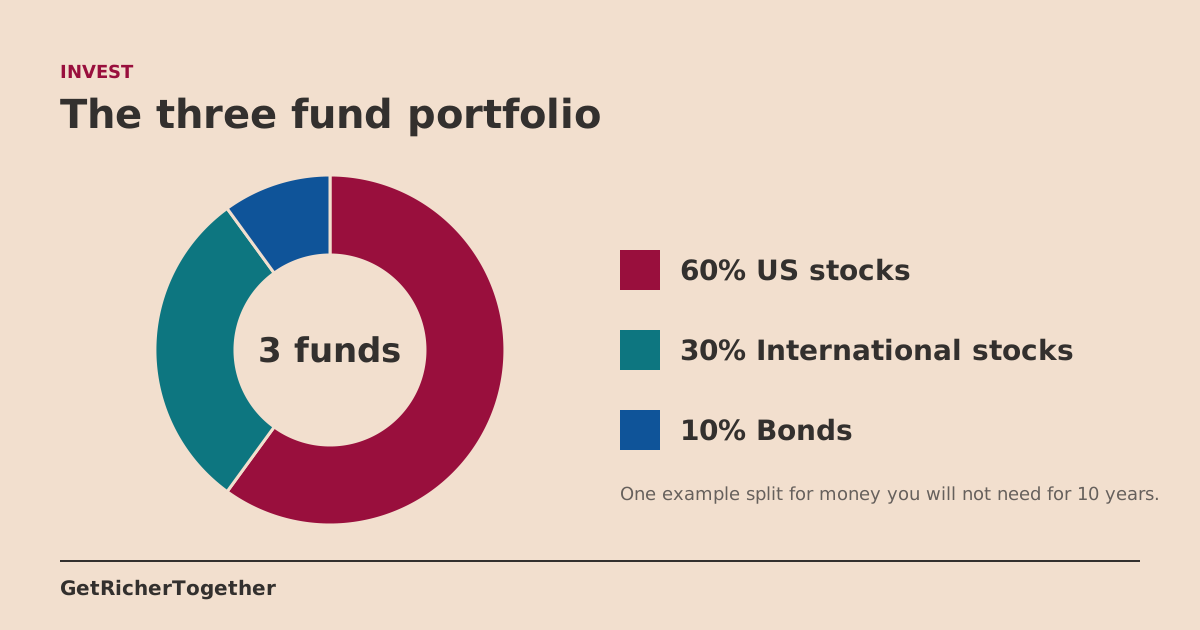
The split depends on your horizon, not on the news. One example:
| US stocks | International stocks | Bonds | |
|---|---|---|---|
| Engine money, 10 years or more | 60% | 30% | 10% |
| Bridge money, 3 to 10 years | 25% | 15% | 60% |
Runway money, needed within three years, belongs in cash rather than any of the three; see the Money Path.
How much to put abroad is a judgment call. Stocks outside the US are roughly a third of world stock market value; many US investors hold less because their spending is in dollars. US review
Keeping it on track
Once a year, check your split. If one fund has drifted more than five percentage points from its target, move new contributions toward the others, or sell a little of the winner. That is rebalancing, and it quietly makes you buy low and sell high.
Prefer one fund? A target date fund holds the same ingredients and rebalances for you. Pick the year closest to when you will start withdrawing.