Taxes
Roth or traditional: pay the tax when it is lowest
The choice between a Roth and a traditional account comes down to one question. Is your tax rate higher now, or will it be higher when you take the money out?

Every 401(k) and IRA comes in two flavors. Traditional: you skip the tax now and pay it when you withdraw. Roth: you pay the tax now and never pay it again, on the money or its growth.
People argue about this endlessly. The math is simpler than the arguments.
The one rule
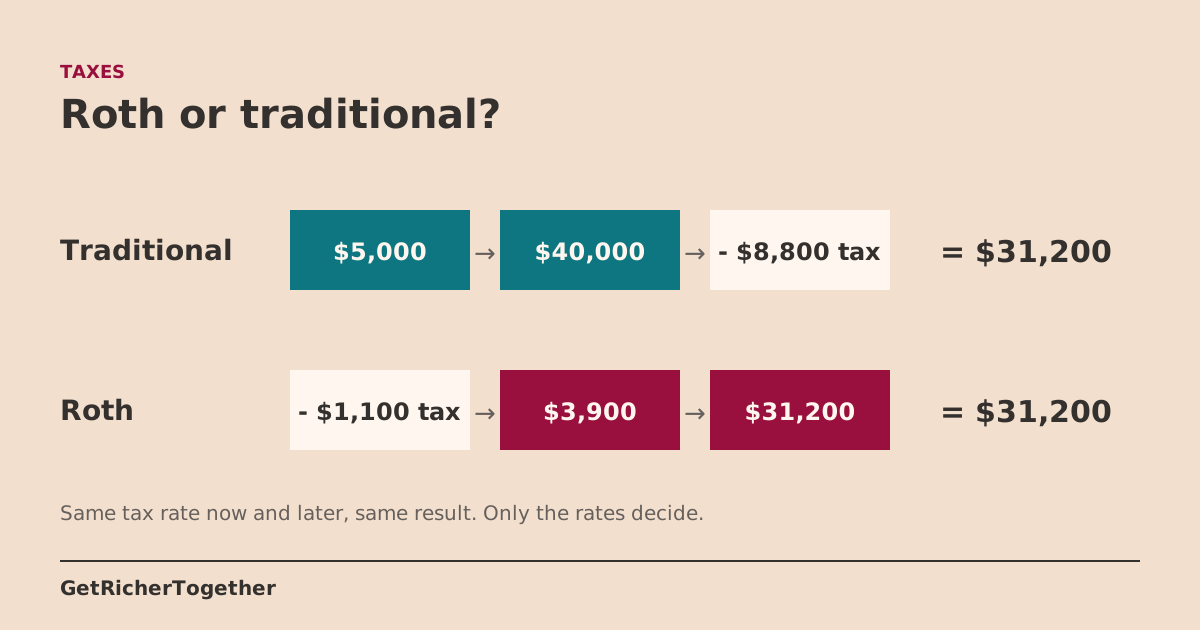
If your tax rate is the same when you put money in and when you take it out, the two end up exactly equal. An example, with a 22 percent tax rate now and later:
| Traditional | Roth | |
|---|---|---|
| Earned | $5,000 | $5,000 |
| Tax now | $0 | $1,100 |
| Invested | $5,000 | $3,900 |
| After growing 8 times | $40,000 | $31,200 |
| Tax at withdrawal | $8,800 | $0 |
| Yours to spend | $31,200 | $31,200 |
Multiplication does not care about order. So the only thing that matters is which rate is lower:
- Rate lower now (early career, a low income year, a sabbatical): choose Roth.
- Rate lower later (peak earning years, expecting a modest retirement income): choose traditional.
- Unsure: split between the two. Having both kinds of money gives you choices about which to draw from each year in retirement.
Things that tip the balance
- Roth IRAs have no required withdrawals in your lifetime, and contributions (not growth) can be taken out at any time without tax or penalty. That makes Roth money more flexible.
- Income limits apply to contributing directly to a Roth IRA. Roth 401(k)s have no income limit. The limits change each year. US review
- State taxes count. Moving from a high tax state to a state with no income tax in retirement favors traditional now.
- Employer matches have traditionally gone in pre tax, whichever you choose for your own part. Newer rules allow Roth matches in some plans. US review
What not to do
Do not let the choice stop you contributing. Either kind, started today, beats the perfect kind started in five years. This is general education; a fee only adviser or tax preparer can run your own numbers.