Money Path
Avalanche or snowball: paying off credit cards
Two methods, one goal. The avalanche saves the most interest. The snowball gives you a win sooner. Pick the one you will finish.

Paying off expensive debt is the best risk free return there is. Every dollar off a card charging 27 percent saves you 27 percent a year, guaranteed. The only question is the order.
The two methods
Pay the minimum on every debt. Then put every extra dollar toward one target:
- Avalanche: the debt with the highest interest rate first.
- Snowball: the debt with the smallest balance first.
When the target is paid off, roll its payment into the next one.
A worked example
Three debts and $800 a month to pay them:
| Debt | Balance | Rate | Minimum |
|---|---|---|---|
| Store card | $1,500 | 19% | $40 |
| Visa | $7,000 | 27% | $140 |
| Car loan | $9,000 | 7% | $250 |
| Avalanche | Snowball | |
|---|---|---|
| Debt free in | 26 months | 26 months |
| Total interest | $2,756 | $2,934 |
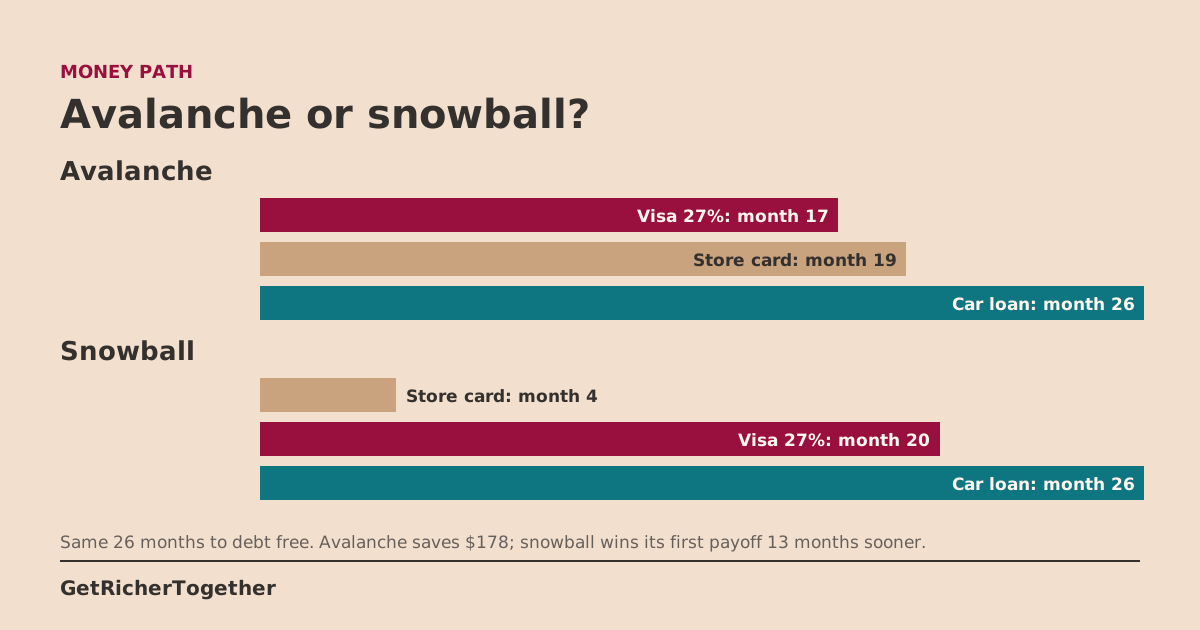
| First debt gone | month 17 | month 4 |
The avalanche saves $178. The snowball clears the store card thirteen months sooner.
Which to choose
The difference in money is often small, and the difference in motivation can be large. Research from Northwestern's Kellogg School of Management found that people who closed out individual accounts were more likely to pay off their whole debt. US review
- Choose avalanche if you are motivated by numbers and the rates differ a lot.
- Choose snowball if you have tried before and stalled, or your balances are small.
Make it stick
- Stop adding to the cards while you pay them down.
- Ask each card issuer for a lower rate. It is a five minute call, and it sometimes works.
- Consider a balance transfer card only if you can pay it off before the promotional rate ends, and count the transfer fee.
- Keep a small cash runway so the next surprise does not go back on a card.